
SUPERBUY SPREADSHEET / PRODUCT DISCOVERY / FEES & SERVICES
Superbuy Fees Explained: Shopping Agent vs Parcel Forwarding
A useful Superbuy fee estimate begins by choosing the correct service. Shopping Agent and Parcel Forwarding can both lead to an international parcel, but they begin with different buyers, responsibilities and service boundaries. The cheapest-looking workflow is irrelevant if it does not match who purchased the item.
1. Choose the service before calculating fees
Use Shopping Agent when Superbuy is asked to purchase an item from a marketplace seller. The product link is submitted, the shopping agent places the order, the seller delivers inside China, and the item enters the warehouse before international parcel submission. Use Parcel Forwarding when you bought the item yourself and arrange delivery to the forwarding address. Superbuy's public guides describe these as separate services.
That distinction affects which purchasing work exists, who communicates with the seller, what inspection or after-sales help may apply, and what information must accompany an incoming package. Do not select a workflow from a fee screenshot alone. First answer one factual question: who placed the marketplace purchase? If Superbuy did, assess Shopping Agent terms. If you did, assess Parcel Forwarding terms and the merchant transaction separately.
Mixing the two can produce false expectations about purchasing fees, seller support, photos and returns.
2. Map the Shopping Agent cost path
A Shopping Agent budget has several possible layers. The first is the live price of the exact marketplace option, not the lowest number on a multi-variant page. The second is China domestic delivery charged by the seller. The third is any purchasing charge that applies to the particular platform or special service. Superbuy's current fee structure says ordinary purchasing from mainstream platforms including Taobao, Tmall, JD.com and 1688 has no purchasing service fee, while second-hand, unlisted or specialist purchasing can use different charges.
The fourth layer is optional warehouse work, such as a specific detail photo, re-inspection or packaging service. The fifth is international freight after the item is accepted and a parcel is submitted. Payment-method conversion or handling may also affect the home-currency amount shown at checkout. Keep these layers separate because ‘zero service fee’ does not mean zero total cost.
3. Map the Parcel Forwarding cost path
Parcel Forwarding begins outside the Superbuy purchasing transaction. You pay the merchant yourself and remain responsible for the original order details, seller communication and domestic shipment to the designated forwarding warehouse. The forwarding budget should therefore record the merchant payment, China domestic delivery, any forwarding-service charge shown for the account or package, optional warehouse or packaging services available to that flow, and international freight. Check the current Parcel Forwarding guide for address formatting, recipient information, package declaration and prohibited-item rules before the merchant ships.
A forwarding warehouse cannot reliably connect an anonymous parcel with an account when required identifiers are missing. Do not assume the Shopping Agent promises about standard purchase handling, inspection photos or seller after-sales automatically transfer. The forwarding service is handling an item that was acquired under a separate merchant relationship, so evidence and dispute responsibilities begin with the user's purchase records.
4. Treat domestic delivery as a real cost
China domestic delivery is easy to overlook because it appears before international shipping. For a Shopping Agent order, record the seller's domestic charge beside the exact product option. For forwarding, record what you paid the merchant or Chinese carrier to reach the warehouse. Free domestic delivery should be confirmed on the live checkout, not inferred from a spreadsheet. If multiple sellers are involved, each may send a separate package and charge separately.
Domestic tracking also has operational value: it proves carrier acceptance and warehouse delivery, helps identify a delayed intake and connects the parcel with the right order. Save the carrier, number and delivery timestamp. A cheap item with expensive domestic delivery, a remote-origin surcharge or several seller parcels may not be the bargain suggested by its headline price. Comparing candidates in original CNY preserves more accuracy than converting each old price to a fixed dollar amount.
5. Buy optional warehouse services only to answer a question
Optional fees are not automatically wasteful, and they are not automatically necessary. A detailed photograph can be valuable when the standard view hides a suspected flaw. A defined measurement can resolve sizing uncertainty. Re-inspection can address a specific mismatch or missing detail. Packaging removal may reduce volume, while reinforcement or cushioning may protect fragile contents. The correct test is whether the service changes a decision or mitigates a named risk.
Write the question first, check the current unit price in Superbuy's fee structure or account, then decide. Avoid purchasing random photos, broad checks or every packaging add-on by default. Also separate seller after-sales from warehouse storage: an optional check is useful only if there is still time and authority to act on the result. A small targeted fee can prevent an expensive international mistake, but repeated unfocused services simply make the cost path harder to understand.
6. Estimate international freight with current parcel data
International freight is a later stage in both workflows. Superbuy's shipping process uses destination, eligible route and estimated package data to collect a deposit, while the logistics provider's verified size and weight determine the final charge. Actual weight is not always the only basis: a light but bulky carton may be billed by volumetric weight under the selected line's rules. Use the current shipping calculator as a planning tool, not a guaranteed quote.
Before warehouse data exists, enter a realistic weight and dimensions and leave a buffer. After intake and packing choices are known, calculate again. Compare route eligibility, weight increments, delivery range, tracking, compensation, customs handling and restrictions—not just the headline amount. The final reconciliation can credit an overpayment or require an adjustment according to the live process. An estimate becoming final after verification is a normal part of parcel pricing.
7. Understand why consolidation can lower or raise cost
Combining several accepted items can avoid repeated first-weight charges and reduce duplicate outer packaging. It can also increase volumetric weight, require a larger carton, mix incompatible restricted goods or place all value in one shipment. Use warehouse storage as planning time, not as a reason to keep adding products. List each item's weight, dimensions where available, original box, fragility, restrictions and declared value. Test one combined parcel against two smaller parcels when the total value or route risk is meaningful.
For example, soft clothing may pack efficiently, while shoe boxes and rigid collectibles can drive volume. A battery or liquid may remove otherwise inexpensive route options for the entire parcel. The best choice is not universal. It is the current eligible route and packaging plan that meets your destination, risk tolerance and delivery needs at an acceptable verified cost.
8. Keep customs and currency outside false promises
A fee guide cannot promise that customs tax, inspection or clearance charges will be zero. Those outcomes depend on destination law, declared information, product classification and customs assessment. Use truthful declarations and read current destination guidance. Payment currency also matters: marketplace prices, Superbuy account amounts, payment-provider conversion and card or wallet charges may not use the same exchange rate or date. Preserve the original CNY product and domestic-delivery figures, then record the actual amount charged in your home currency.
Do the same for optional services and international freight. This creates an auditable landed-cost record without pretending that a pre-purchase dollar conversion is exact. When comparing two products, note whether one is bulky or restricted; allocating freight equally across every item can hide which product created most of the parcel cost. Honest ranges are more useful than precise but unstable totals.
9. Use a fee worksheet that follows the transaction
For Shopping Agent, create lines for the exact product option, seller domestic delivery, applicable purchasing charge, optional warehouse services, estimated international freight, payment conversion and destination contingency. For Parcel Forwarding, replace the agent-purchase line with the separately paid merchant transaction and add any current forwarding charge or required service shown for that package. Mark every number as quoted, estimated, paid or reconciled. Add the date and source page because fee schedules and route prices can change.
At warehouse arrival, replace estimated weight and dimensions with available evidence. At parcel submission, save the chosen route and deposit. After logistics verification, record the final freight and adjustment. This worksheet reveals where the money changed instead of collapsing everything into ‘Superbuy fees.’ It also makes two service options comparable without assuming they provide identical purchasing, inspection, seller-contact or after-sales work.
10. Make the choice from responsibility, evidence and total cost
Choose Shopping Agent when you want the platform to place the marketplace order and the current terms support that source and item. Choose Parcel Forwarding when you already control the merchant purchase and can meet the forwarding-address, identification, declaration and evidence requirements. Then estimate the full path: purchase, domestic delivery, any applicable service charge, decision-specific warehouse extras, packaging and international freight. Live eligibility, charges, optional services, route rules and account controls can change, so verify them for the actual order.
The durable rule is to match fees with responsibility. A label such as ‘no purchasing fee’ describes one layer under stated conditions; it does not erase seller delivery, selected services, freight, conversion or destination costs. A clear ledger turns a marketing phrase into a usable buying decision.
Compare service costs on the same basis
Create two columns when comparing Shopping Agent with Parcel Forwarding: what you pay the seller, and what you pay for the onward service. Put domestic delivery, optional inspection or handling, international transport and any destination charges in their own rows. A free purchasing service does not make the full journey free. Mark uncertain amounts as estimates rather than entering zero. Confirm that the same products, destination and packaging assumptions are used on both sides before deciding which route fits.
Keep the dated quote and the applicable service description together so a later change can be traced to its actual cause.
 Patagonia quick-drying pants
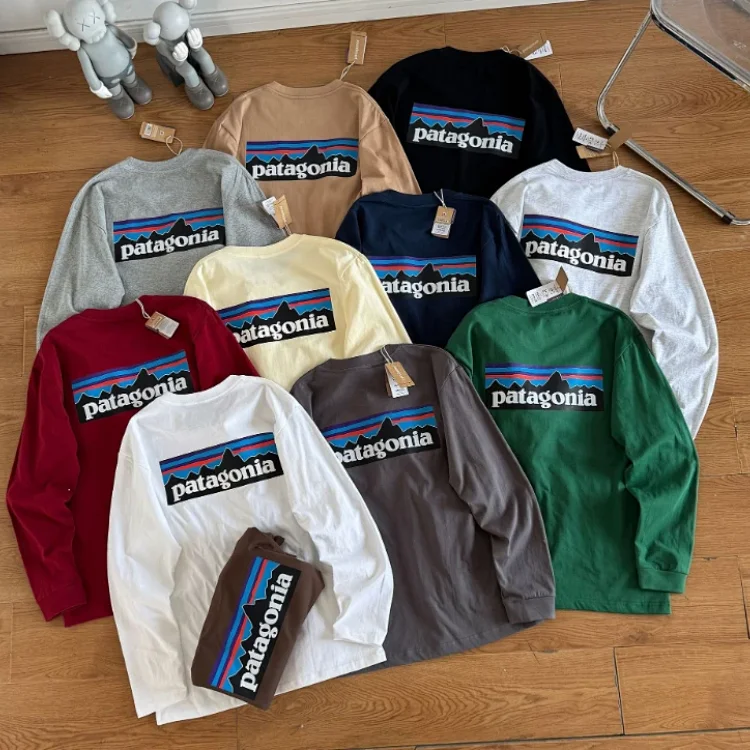 Patagonia classic loose-fitting crew neck
 White low-top sneakers with wide laces